 Carolina Dingo
Characteristics & Temperament
The Look of a Wild Dog
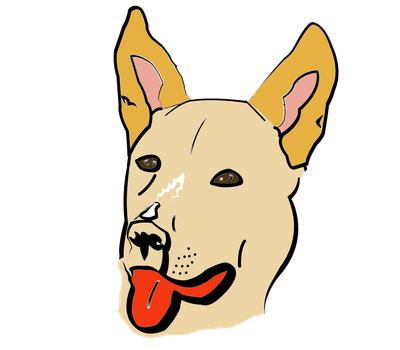
A Carolina Dog looks like nature's default setting for “dog”: medium size, lean and athletic, with a wedge-shaped head, expressive almond eyes, large upright ears, and the breed's signature fish-hook tail — carried in a distinctive curve, especially when alert. The classic coat is ginger or “yaller” red with pale shading on the underside, though cream, tan, black-and-tan, and piebald dogs occur too.

Primitive Behaviors They Never Lost
- Snout pits: tidy little holes dug with the muzzle, mostly by females in cooler months. One of the breed's genuine mysteries.
- Pack sensitivity: Carolina Dogs read household dynamics constantly. They know who's anxious, who's in charge, and who might drop food.
- Prey drive: squirrels, rabbits, and unfortunate lizards are taken very seriously. Recall training and secure fences are not optional.
- Efficient movement: they trot like wild canids and can be startlingly fast and agile when it counts.
- Cleanliness: many Carolina Dogs are fastidious self-groomers, almost cat-like, and tend to be easy to house-train.
Temperament: Devoted, Watchful, Independent
With their families, Carolina Dogs are affectionate, playful, and deeply loyal — many bond intensely to their people. With strangers, expect polite suspicion: these are dogs whose ancestors survived by being careful. They warm up on their own schedule, and forcing the issue backfires. This is also an intelligent, independent breed: a Carolina Dog will do what you ask when it trusts you and sees the point, which is exactly why trust-based training works so well.
How They Compare
| Trait | Carolina Dog | Basenji | Shiba Inu |
|---|---|---|---|
| Origin | Natural landrace, SE United States | Ancient breed, Central Africa | Ancient breed, Japan |
| Size | 30–55 lb | 20–26 lb | 17–23 lb |
| With strangers | Reserved, warms up slowly | Aloof | Aloof to indifferent |
| Vocal style | Howls, yodels, rare barking | Yodels (barkless) | The famous “Shiba scream” |
| Trainability | High with trust, independent-minded | Independent | Very independent |
| Rarity in the US | Rare (but common in SE shelters) | Uncommon | Popular |
Health & Lifespan
Natural selection is a ruthless health screener, and it shows: Carolina Dogs are generally robust, with fewer inherited problems than many purebreds and typical lifespans around 12–15 years. Routine veterinary care, weight management, and exercise cover most of what they need. Some owners report sensitivity to ivermectin in individual dogs, so it's worth discussing parasite prevention with your vet.
Common Questions
How big do Carolina Dogs get?
Most Carolina Dogs weigh roughly 30–55 pounds and stand about 17–24 inches at the shoulder, with a lean, athletic build. Males are usually larger than females.
Do Carolina Dogs shed?
Yes. They have a weather-resistant double coat and shed noticeably, especially during seasonal coat changes in spring and fall. Weekly brushing (daily during heavy sheds) keeps it manageable.
Are Carolina Dogs aggressive?
No — well-socialized Carolina Dogs are gentle with their families. They are naturally reserved and watchful around strangers, which is shyness and caution, not aggression. Early socialization matters a great deal with this breed.
Do Carolina Dogs bark a lot?
They are generally quiet dogs, but they are expressive vocalizers when they have something to say — many owners report howls, yodels, and “talking” rather than nuisance barking.
What are snout pits?
Small, neat holes Carolina Dogs dig in soil with their muzzles — a distinctive primitive behavior documented in the breed, seen especially in females in fall and winter. Nobody is entirely sure why they do it, which is very on-brand for this breed.