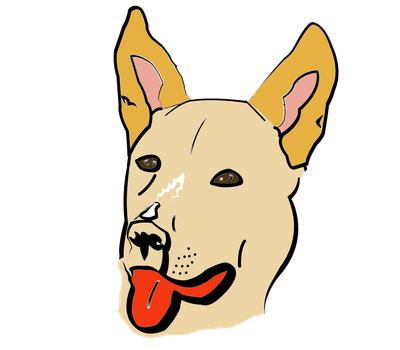
 Carolina Dingo
Training Through Trust
Training a Carolina Dog goes beyond teaching commands — it's about building a relationship with an animal whose ancestors made their own decisions for thousands of years. These dogs are highly trainable, but on different terms than biddable modern breeds: a Carolina Dog is always quietly asking “is this worth my while, and do I trust the person asking?” Answer both questions well and you'll have one of the most responsive dogs you've ever met.

The Foundation: Trust Before Everything
Primitive breeds are sensitive to fairness and consistency. Harsh corrections don't produce obedience in a Carolina Dog — they produce a dog that avoids you, and avoidance is the opposite of training. Build the foundation instead:
- Be predictable. Same rules, same routine, same tone. Predictability reads as safety, and a Carolina Dog that feels safe is a dog that can learn.
- Watch your body language. These dogs read posture and movement fluently. Standing square and looming feels like pressure; turning slightly sideways and crouching is an invitation.
- Reward generously and variably. Food works, but so do play, praise, and access to things they want — the door opening, the leash coming out, the couch. Mix your currencies.
- Never punish coming to you. No matter what preceded it, arriving at your feet is always the best thing that happened today. This one rule underwrites your entire recall.
Socialization: Early, Gentle, Ongoing
Natural wariness of strangers is a breed feature, not a flaw — but it means socialization deserves real effort. From as early as possible, let your dog observe new people, dogs, sounds, and places at a distance where it stays relaxed, and let it close that distance by choice. The goal isn't a dog that loves everyone; it's a dog with the confidence to be neutral. Never let strangers force interactions on a nervous primitive-breed dog — you'll pay that trust back with interest.
Recall and the Prey-Drive Problem
Here's the honest part: a Carolina Dog mid-chase may not hear you, and no amount of training removes prey drive that natural selection spent centuries installing. Work with it instead:
- Train recall on a long line (10–15 m) so success is always available and failure never is.
- Pay recall like it's the lottery — the highest-value rewards you own are reserved for coming when called.
- Practice “premature” recalls: call the dog when it's about to get interested in something, not after the squirrel launch sequence has begun.
- Accept management: in unfenced areas, a long line or leash isn't a training failure — it's how responsible primitive-breed ownership looks.
Mental Work Is Half the Exercise
A tired Carolina Dog is a well-behaved Carolina Dog, and mental effort tires them as much as miles do. Ten minutes of trick training, scent games (“find it” with hidden treats), or puzzle feeders can settle a restless evening better than another lap around the block. This is also where the breed shines — they learn fast and love having a job, even if the job is balancing a chopstick on their nose.
A Simple Daily Framework
- Morning: proper exercise — a brisk sniff-walk, fetch, or yard zoomies with you involved.
- Midday: a food puzzle or chew for independent settling.
- Evening: 10 minutes of training games, then genuine wind-down time together.
- Always: end sessions while the dog still wants more.
Patience is the whole trick. Trust builds slowly and compounds daily — and once a Carolina Dog decides you're its person, it will spend the rest of its life proving it.